Founders
You built the engine. You can hear the misfire. Every mechanic you hire adjusts the mirrors. We open the bonnet, find the seized piston, and get the thing running the way it should.
Why we exist
The chaos you already see
Your marketing team has fifty people executing tactics across twelve channels. The performance reports show improvements. Finance sees the same channels burning cash. The attribution model credits Paid Search conversions that Organic actually generated. Mobile performance is catastrophic, but Engineering says it is not on their roadmap. Checkout abandonment sits at seventy percent, but Operations will not approve changes because fraud prevention takes priority.
The constraint nobody names
You can see the problems. You cannot name them without political pushback. Your CMO cannot tell Sales that their compensation plan is undermining marketing impact. Your eCommerce Director cannot tell Merchandising that their taxonomy is destroying Paid performance. Your Head of Digital cannot tell the Board that the governance structure is preventing exactly what he is accountable for.
It is never about missing competence. It is about accountability existing without decision-making authority, and nobody having the conversations needed to change that.
What we actually do
We do not build strategies you cannot execute. We do not produce decks that look impressive but change nothing. We assess what is actually broken, force the decisions you cannot force alone, and stay close enough to execution to make sure changes actually improve results.
We are not McKinsey. We have run the operations we assess. We fix businesses because we know: without the right people, no system works.
Write directly: |
Who we are
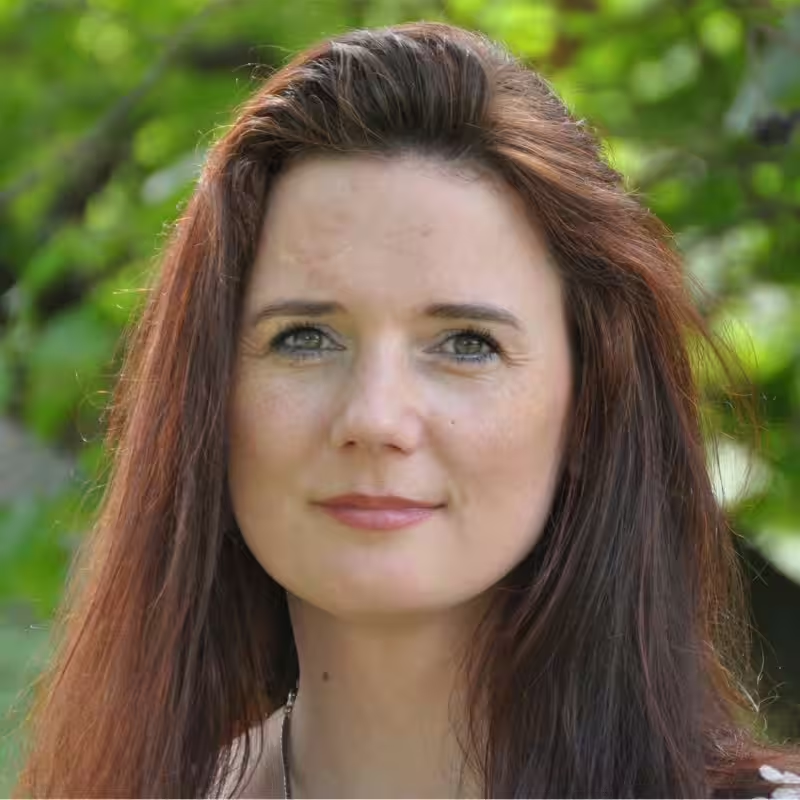
Twenty years in data-driven online marketing. Financial services, banking, fashion eCommerce, household products, Head of Online Marketing at Gelbe Seiten. B2B and B2C. Native German speaker with deep DACH market knowledge.
Technical depth, not checklist compliance
I have built SEO strategies from the technical foundation to the content architecture. I know how search engines actually work and what technical SEO demands beyond checklists. I can see where agencies push complexity to justify retainers for what is actually straightforward work. I have led teams, audited agency output and rebuilt what was poorly delivered.
Company perspective, not agency thinking
letsrocc is my first founding. That matters: I think from a company perspective, not an agency perspective. I was the person inside organisations who had to execute marketing strategies, through procurement processes, compliance requirements, approval layers and budget constraints that agencies never see.
Deep DACH market expertise
At letsrocc I combine deep knowledge of the German market with operational experience in B2B and B2C. I know why purchase decisions in Germany take longer than in other markets. I know the difference between regulatory requirements that genuinely constrain and those that are pure process theatre.
I also recognise when agencies deliver substance and when it is theatre. After years of auditing agency output, I see the difference between real expertise and confidently sounding mediocrity immediately.
People systems before technical systems
We built letsrocc on a people-centred foundation. Companies are people systems first, technical systems second. Marketing technology alone does not deliver results. The people who deploy it do.
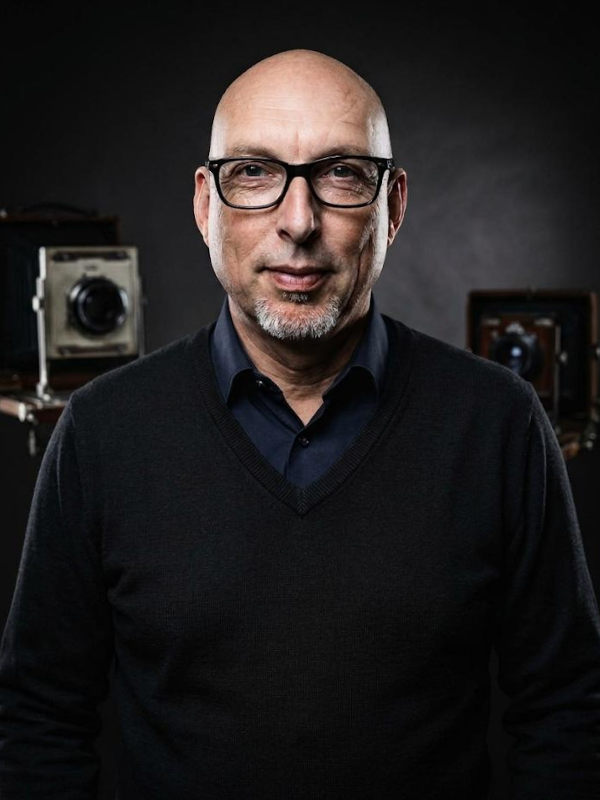
I have built over 2,500 websites since 1995. Six company exits. Worked as eCommerce Director, CMO, COO, Commercial Director in London, Berlin, Frankfurt, New York, Singapore. B2B and B2C specialist in food, music software, tourism, banking and fintech, NGOs, home and garden, healthcare and wellness.
Digital evolution since 1990
My digital career began in 1990 on bulletin boards. Through the early social media landscape, Facebook Paid models right after launch, Google Ads campaigns when the platform was still new, building a CRM and email marketing platform in the early days of SaaS. Plus digital innovation and social media strategies for the UK Government, German federal ministries and European Commission panels.
Hands on at every level
I can code. I can design. I can build a complete digital operation from infrastructure to customer acquisition. HTML, CSS, performance optimisation, Paid campaigns with million-pound budgets, developing and executing SEO strategies. Thirty years of delivering myself, not delegating.
That has consequences: when your agency claims something is not possible or will take three months, I know whether that is true or whether they are protecting margin. When your internal team says the platform does not support it, I know whether that is accurate or whether the competence is missing.
Every seat at the table
I have commissioned agencies. I have run agencies. I have been brought in to rescue work that looked great in presentations but fell apart with real customers. From ministerial level through EU Commission and international NGOs to companies of every size, across different countries and regulatory environments.
What thirty years taught me
Thirty years and over 2,500 digital operations have shown me one thing: growth does not fail because of channels. It fails because leaders make unclear decisions, reward contradictory behaviour and run systems that were never designed for the revenue they now expect.
Why we built an anti-agency
Claudia and I founded letsrocc as an anti-agency because most agencies are optimised for utilisation, retainers and deliverables. That structure shapes their incentives and therefore the quality of their decisions.
With us it is different. Senior consultants who work themselves instead of delegating. Understand incentives first, then evaluate channels. Strengthen people instead of replacing them. Fix the system that carries revenue, not the surface that decorates it.
Why this model works
Two senior operators, not a layered team.
Most consultancies sell senior thinking and deliver junior execution. Every conversation you have with us is with someone who has run the operations we assess. No handoffs. No translation layers. No surprise when the person on the call is not the person doing the work.
Mixed operator backgrounds expose what specialists miss.
Structural diagnosis needs people who have sat in different seats. Between us we have been CMO, COO, eCommerce Director, Head of Online Marketing, agency owner, product builder and in-house operator. That spread means we see how measurement failures connect to incentive failures connect to handoff failures. A channel specialist cannot see that because they have only ever looked from one direction.
Governance and operating reality matter as much as channel skill.
Most marketing problems are not caused by bad marketing. They are caused by decision-making structures that prevent good marketing from landing. We assess the operating system around marketing, not just the marketing itself. That is the difference between fixing the symptom and fixing the cause.
How letsrocc got its name
Naming a company is hard. Properly hard. It takes dozens of attempts, countless domain checks and something that actually fits who you are.
Then letsrocc appeared in one of the combinations and we both stopped.
We are both musicians. The name had energy. It had drive. It felt like forward movement, not committee consensus.
Then we noticed the numbers. We both have seven as our lucky number. letsrocc has exactly seven unique letters. That felt right.
Claudia loves turquoise. We needed a brand colour. Turquoise with black felt clean, modern, compatible. Decision made.

But here is where it gets interesting. The CC in letsrocc stands for Claudia and Chris. That is why we are not called letsrock. The double C is deliberate.
Then we looked at the hex code of our turquoise. #6cc6cc. Our initials literally sit inside the colour code itself. CC. Right in the middle.
#6cc6cc
C for Claudia. C for Chris. Right there in the colour code.
In that moment we knew we had it. The brand felt complete. Not manufactured. Not focus-grouped. Just ours.
We carry a database of solvable problems with us, built from fifty years of combined operational experience across thousands of digital operations. We are entrepreneurial, approachable, honest, ethical and transparent. The name reflects that. Everything else we have built reflects it too.
What makes us different?
We are not Fractional CMOs.
Fractional CMOs embed themselves in your organisation. We operate externally. That distinction matters because external means we do not navigate internal politics. We force decisions based on commercial outcomes, not political comfort. We support the people in your organisation who need authority they currently lack.
We are not single-function consultants.
We operate across marketing, sales and product gaps because revenue problems are rarely contained in one department. Attribution is broken because marketing, sales and product measure contradictory outcomes. We assess and fix the connections between functions and support the people caught in those gaps.
We do not sell packages.
We assess, you decide what gets fixed, and we support the execution or connect you with specialists in our network. We do not track hours. We do not bill by the day. We solve problems, support people and are accountable for outcomes.
We support your team, we do not replace it.
The best marketing happens inside organisations with teams who understand the business. Our job is to make your team more effective by removing constraints that prevent them from delivering. Political cover. Stakeholder alignment. Forcing decisions when consensus fails.
We are no longer digital marketing tacticians, but we were for decades.
We do not run your campaigns, build your websites or manage your Paid media. We do something more valuable. We assess why your campaigns are not working, why your website is not converting, why your Paid media is wasting budget.
We understand digital evolution because we lived it.
Chris started on bulletin boards in 1990. Claudia built SEO and online marketing strategies through every major algorithm update, every platform shift and every regulatory change in DACH markets. We do not learn digital marketing history from case studies. We built it, broke it, fixed it and evolved with it over three decades.
We are people-centred because companies are people systems.
Without people, companies cannot function. When we assess what is broken, we are usually assessing where people have been set up to fail. Technology matters. Channels matters. Strategy matters. But people deliver all of that, and most business problems are people problems disguised as technical problems.
We know what excellence looks like because we built it
The consulting gap
Most consultants have never built what they advise on. They studied marketing, worked at agencies, supervised teams that do the tactical work. They present strategies without knowing whether the execution is even possible.
2,500 operations over three decades
Between us we have built over 2,500 digital operations over three decades. We wrote the code. We designed the interfaces. We managed the campaigns. We optimised the conversions. We fixed what broke at 2am because we were the only ones who understood how the systems connected.
Why scar tissue beats theory
That operational scar tissue matters when you are trying to force change in your organisation. When your agency says the checkout rebuild will take six months, we know whether that timeline is realistic or whether they are protecting utilisation rates.
Practitioners, not theorists
We recognise excellence because we built it ourselves across decades, sectors, countries and platform generations. We recognise mediocrity because we have seen thousands of implementations. When we tell you something is broken, you can trust that judgement.
If it feels like activity and outcome are no longer telling the same story, then we should talk.
Talk through the situation